2026-11-05 · Derek Ryberg
How Alabama Storms and Hail Damage Auburn Roofs
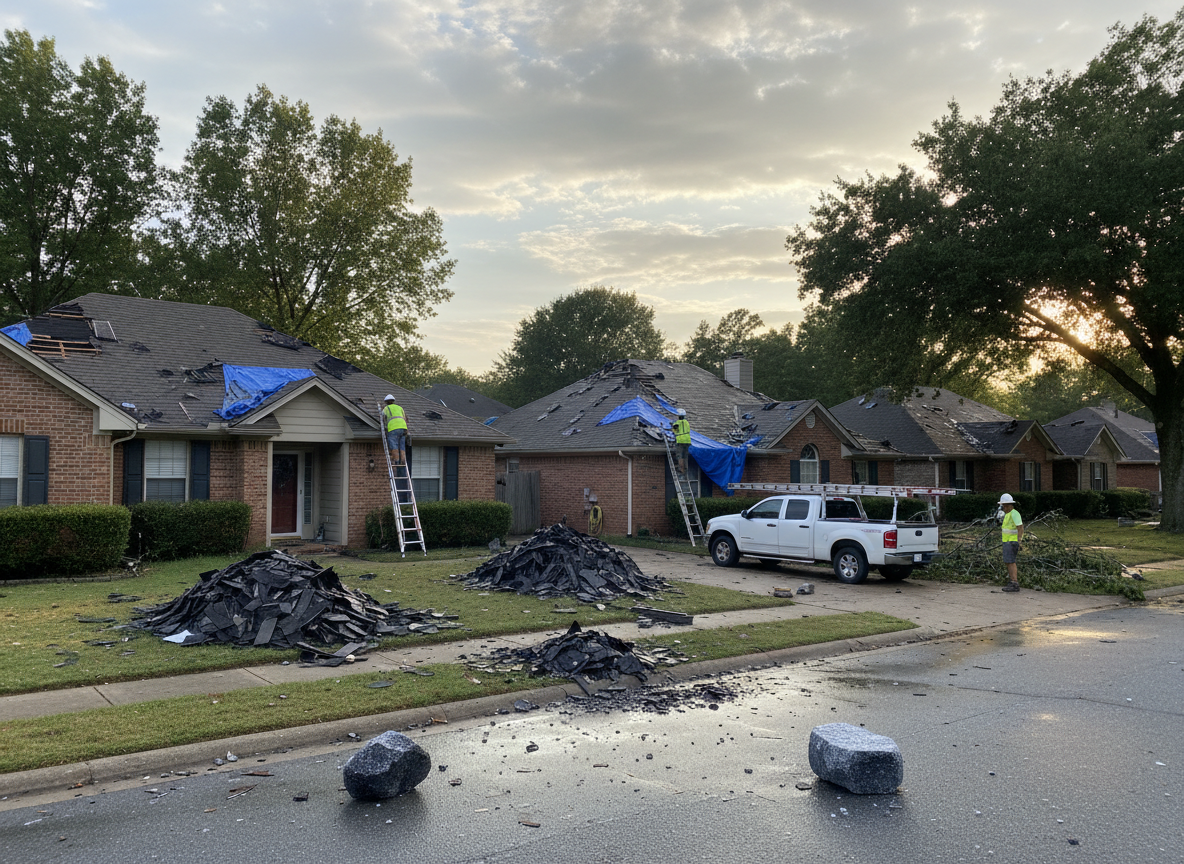
Alabama storms and hail damage Auburn roofs primarily through granule loss, cracking, and denting on asphalt shingles, with hailstones often reaching 1 inch or larger during peak spring events and high winds exceeding 50 mph tearing underlayment near landmarks like Jordan-Hare Stadium.
Hail Formation and Size Patterns in Lee County
Hail forms in the humid subtropical climate of Auburn when warm summer air collides with cooler fronts moving from Montgomery and Tuscaloosa, creating updrafts that grow ice pellets to 0.75–2 inches. These sizes dent metal flashing and fracture shingle surfaces on homes in Hickory Hills and Downtown Auburn, where older housing stock from the 1970s–1990s shows faster granule shedding. The warm summers accelerate UV degradation between storms, leaving roofs more brittle when hail arrives. Homeowners near Toomer's Corner often notice white spots on dark shingles first because the impact exposes the mat layer. This pattern repeats yearly, with April and May bringing the highest frequency based on regional weather records.
Wind-Driven Rain and Its Effects on Roof Edges
Strong winds from Gulf moisture push rain under shingles and around vents on roofs in Pepperell and The Village, where tree cover funnels gusts. In Lee County the combination of 60–70 mph straight-line winds and prolonged humidity causes decking to swell, leading to nail pops within 3–5 years on exposed slopes. Homes closer to open fields near Jordan-Hare Stadium experience more uplift at eaves because wind pressure builds without natural windbreaks. The subtropical warmth keeps moisture trapped longer, promoting rot along valleys before leaks appear inside. Checking these edges after each major front helps catch issues before they reach interior ceilings.
Visible Signs of Storm Damage on Local Housing Stock
Granule accumulation in gutters, cracked tabs, and soft spots underfoot indicate hail or wind damage on Auburn roofs. In neighborhoods like Hickory Hills, 20–30 year old shingles show these signs faster due to prior UV exposure from warm summers. Near The Village, metal roofs may display dimples rather than cracks, while flat sections on commercial buildings collect water that ice expands during rare winter dips. Residents in Pepperell often spot missing ridge cap pieces after events that also affect nearby Opelika. Early inspection of these markers prevents escalation into full interior water damage.
Timing Assessments After Storms in Auburn
Schedule checks within 48–72 hours once winds drop below 20 mph, focusing first on north-facing slopes that receive the most hail in Lee County storms. Compare pre-storm photos with current conditions around vents and valleys on homes near Jule Collins Smith Museum of Fine Art. Document dents and granule loss with close-up images before any debris removal. This sequence matches how claims adjusters evaluate properties in the region and supports decisions between targeted fixes and broader work.
For guidance on distinguishing repair from replacement needs after these events, review Roof Repair vs Replacement: What Auburn Homeowners Should Know. Homeowners dealing with confirmed storm impacts can explore storm damage repair options or start with a roof inspection. Additional steps for insurance processes appear in How to File a Roofing Insurance Claim After Storm Damage.